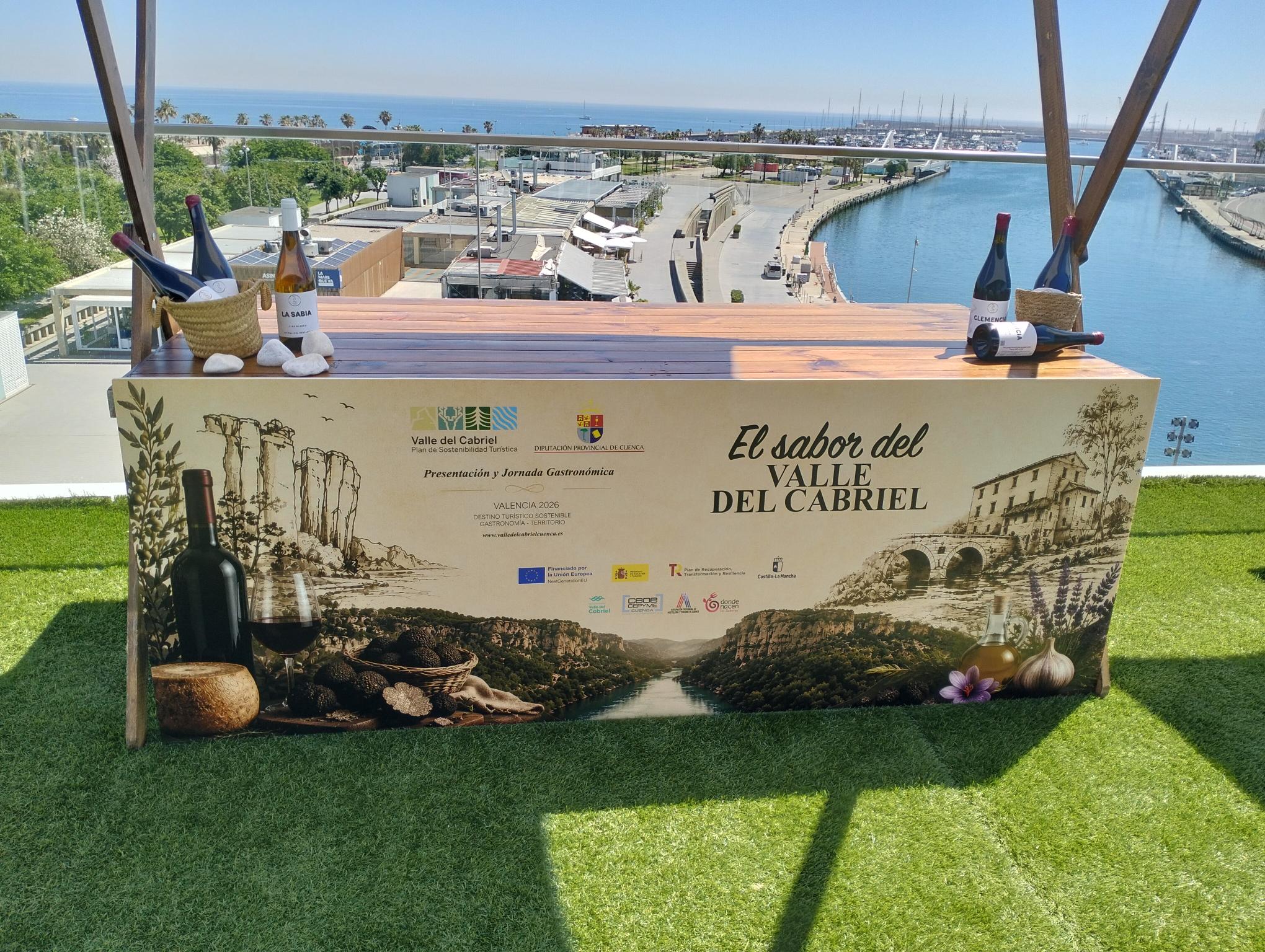
The Cabriel Valley arrived in Valencia not with a whisper, but with the unmistakable language of food: the scent of mushrooms hitting a hot pan, the deep savoury pull of slow-cooked game, the sweetness of local honey, and the bright energy of chefs and producers eager to tell the story of their land. What began as a promotional event at Veles e Vents in the Port of Valencia became something richer and more memorable—a celebration of a landscape, a culture, and a way of eating that still feels deeply rooted in place.
For anyone who has not yet travelled into this corner of inland Spain, the Cabriel Valley is one of those destinations that seems to reveal itself slowly. It is part of a biosphere reserve crossed by the Cabriel River—often described as one of the cleanest rivers in Europe—and its appeal lies in the way nature, history and gastronomy feel inseparable. In Valencia, that identity was translated into a sensory experience for media guests, food lovers, business figures and digital creators, all invited to discover why this region of Cuenca deserves a place on the culinary map.
A destination introduced through flavour
There is something particularly smart about introducing a destination through its table before asking people to explore its roads, villages and landscapes. The Cabriel Valley Sustainable Tourism Plan and the Provincial Council of Cuenca clearly understood that when they chose Valencia as the stage for this gathering. Close enough to feel connected, large enough to matter, and already culturally curious, Valencia is exactly the kind of nearby city where future travellers can be won over one bite at a time. The event was held at Veles e Vents, the iconic building at La Marina known for its relationship with food, events and the Mediterranean skyline—a fitting venue for a region trying to present itself with confidence and personality.
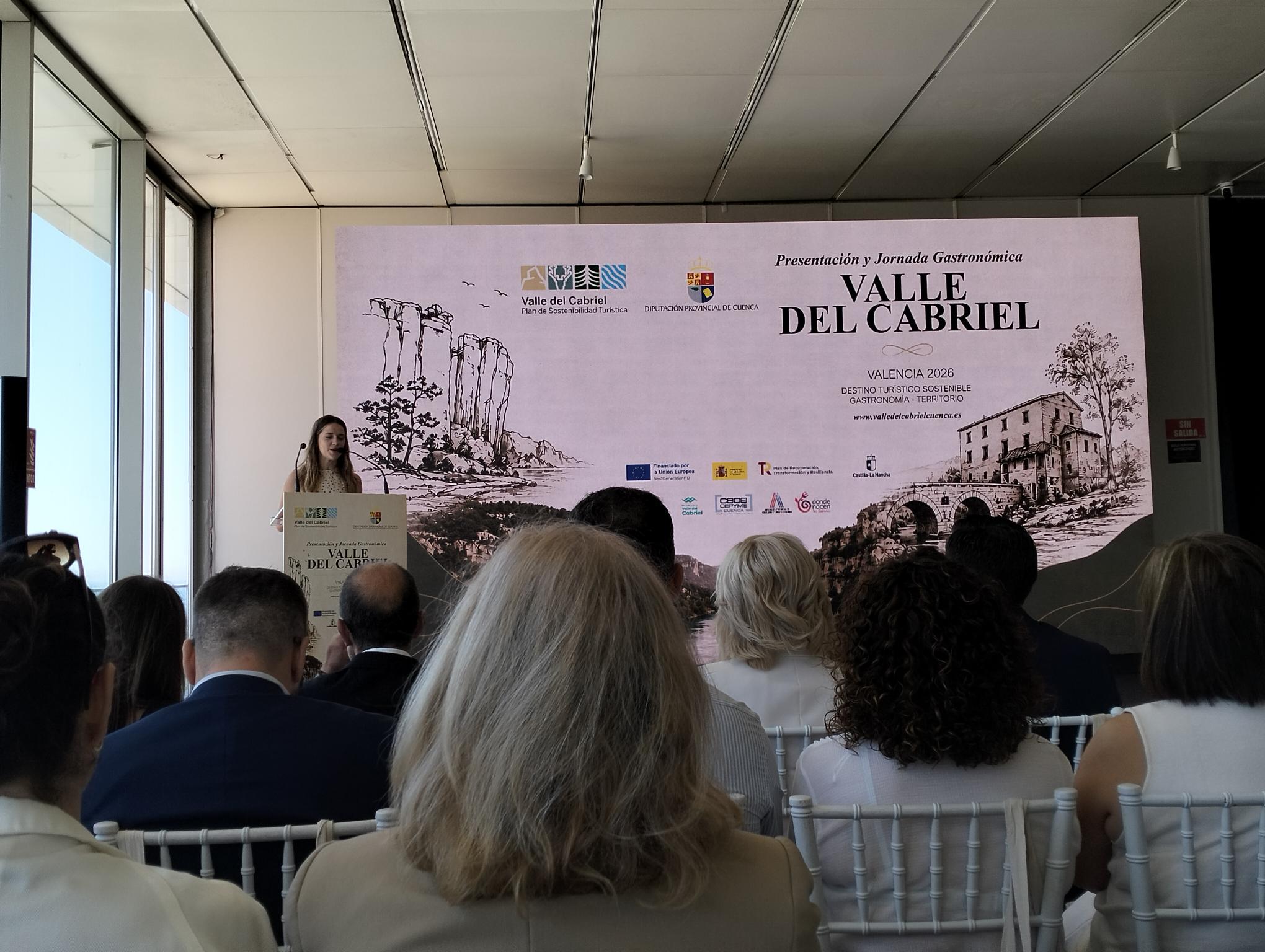
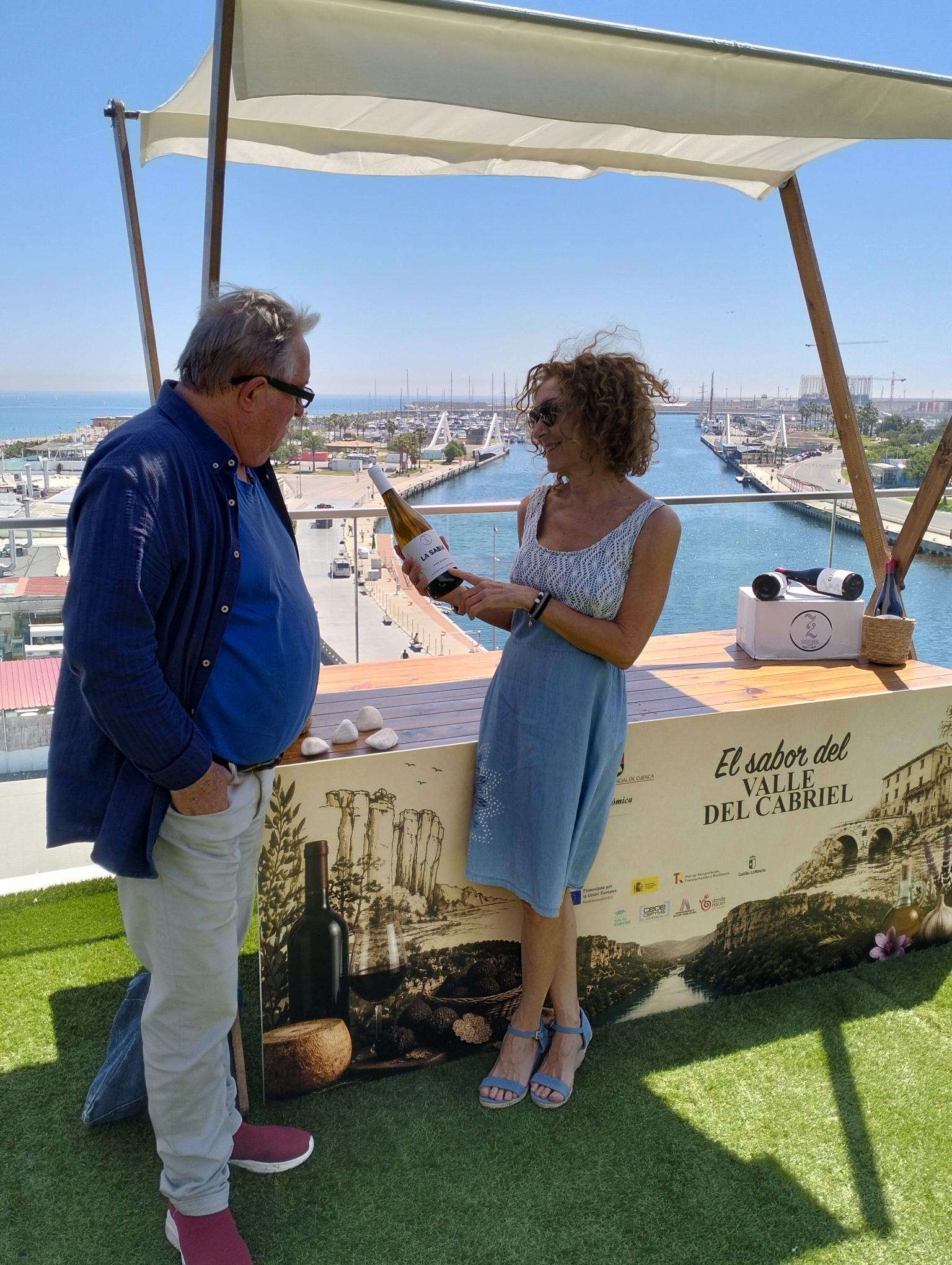
The event was presented by Ana Jara, an actress with her roots in the area, and who is the Ambassador for the project. Official speeches were also made by Alvaro Martinez Chaca, President of the Diputación of Cuenca Province, in which the county of Vallé de Cabriel sits (amongst others).
The format worked because it avoided feeling like a conventional tourism pitch. Yes, there were speeches and videos, and yes, there was a clear institutional goal behind the day. But the strongest message came from the food itself. This was not a glossy brochure about authenticity; it was authenticity laid out in edible form—poured into glasses, spooned onto tasting plates and explained by the people who grow, cook and make it.
From the Presentation to the Terrace.
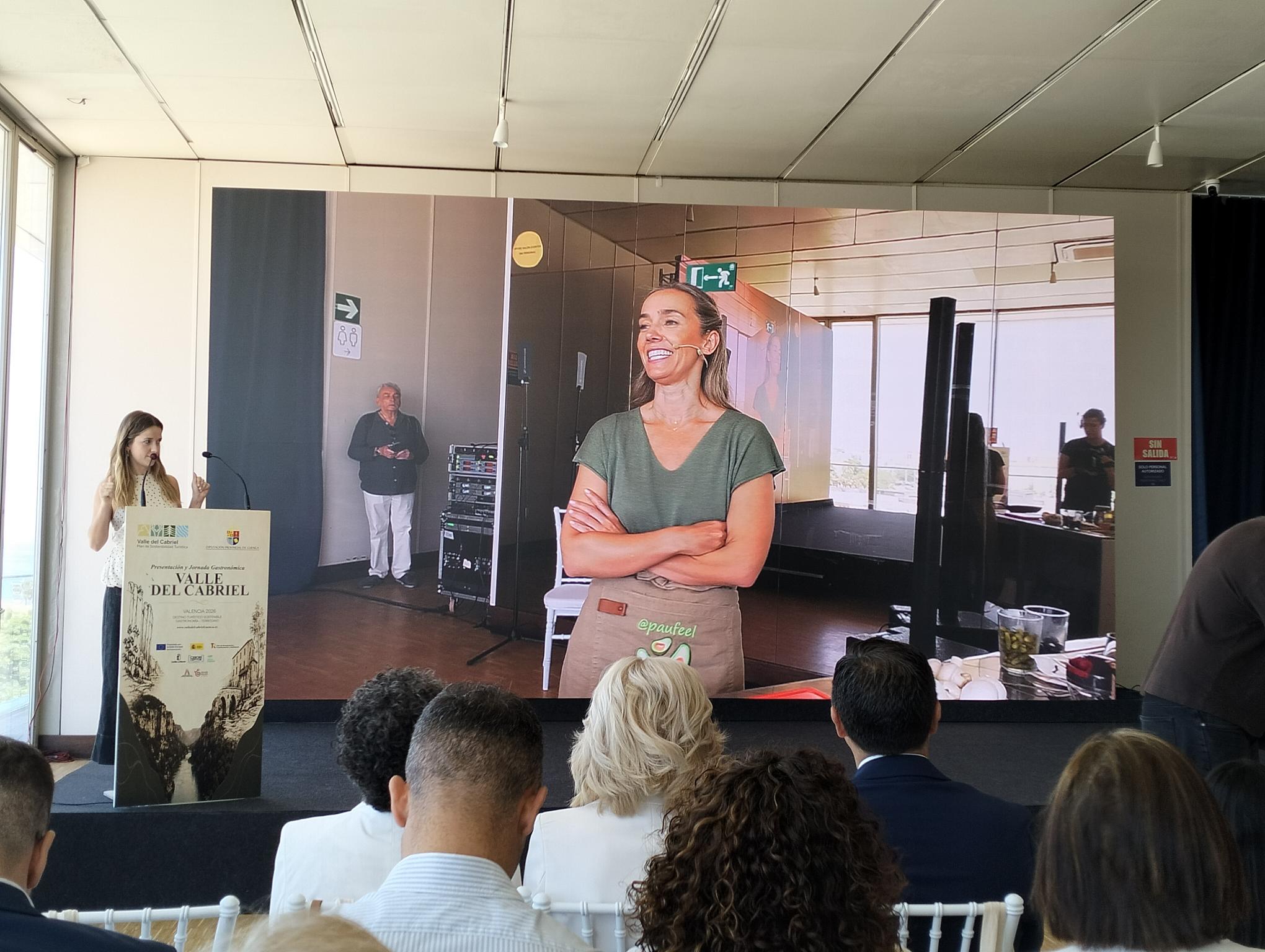
One of the liveliest moments of the day came with the showcooking led by @Paufeel, the food creator known off-screen as Paula Monreal, whose enormous Instagram audience has made her one of the most visible culinary voices in Spain. She acted as a bridge between local products and a broader public, taking ingredients from the Cabriel Valley and translating them into a dish designed to be attractive, contemporary and instantly shareable. The recipe was a sauté of local mushrooms with Parmesan baskets and burrata salad. This dish sounds modern enough for the city, but still anchored in the ingredients and identity of the territory.
That combination is worth noting. So much regional promotion fails because it insists on presenting tradition as a sealed glass cabinet: admirable, untouchable and faintly distant. Here, tradition felt alive. It was being sautéed, plated and tasted in real time. Guests were not simply told that the Cabriel Valley has excellent produce; they were given a way to imagine those products in their own kitchens, in a restaurant menu, or better still, at the source itself.
And then came the part every good food event needs: the chance to wander, taste and compare. On the terrace, the experience opened out into something more relaxed and more revealing, with restaurants and producers offering a direct encounter with the flavours of the valley.
Four restaurants, two bodegas, one edible landscape
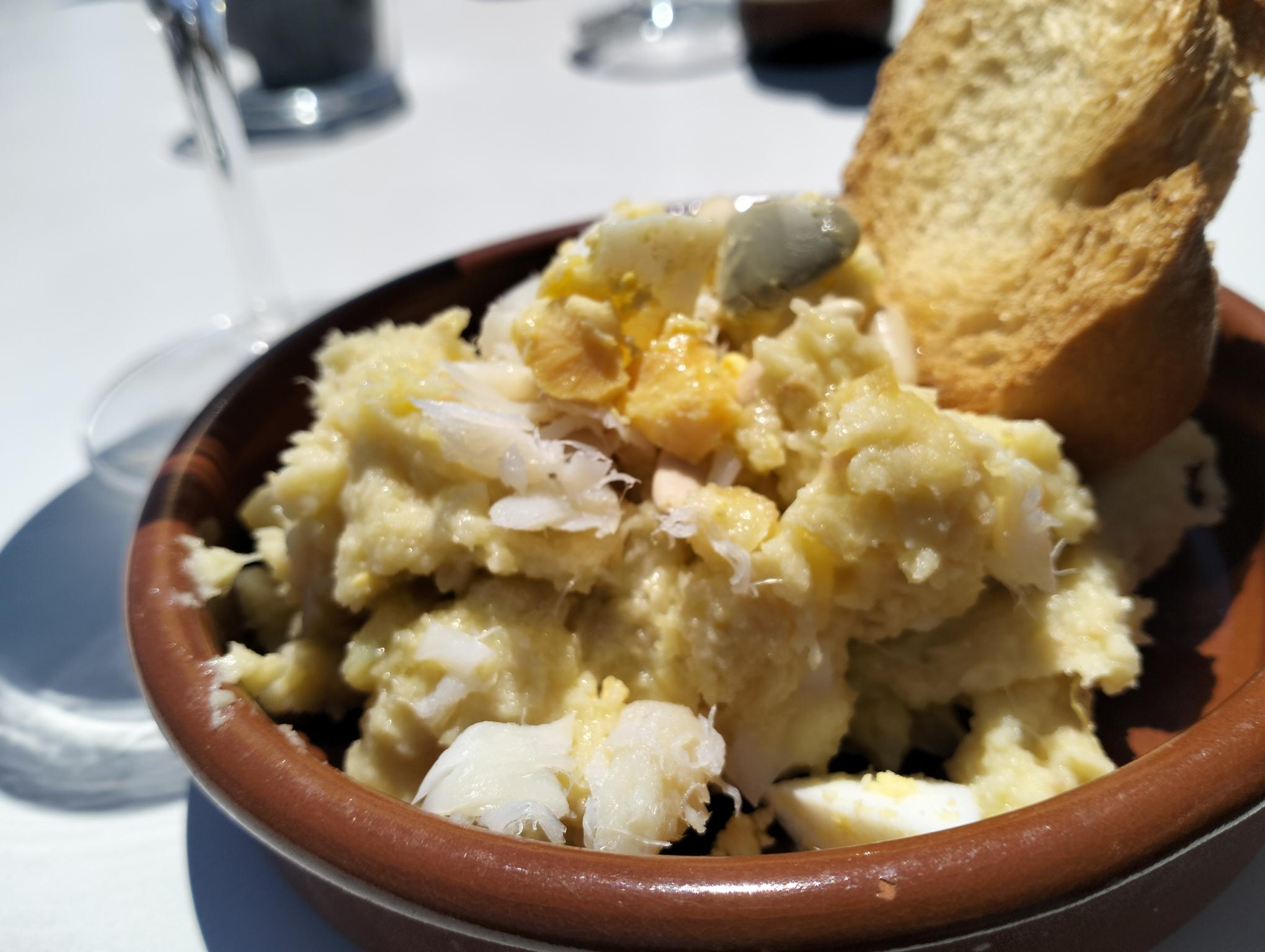
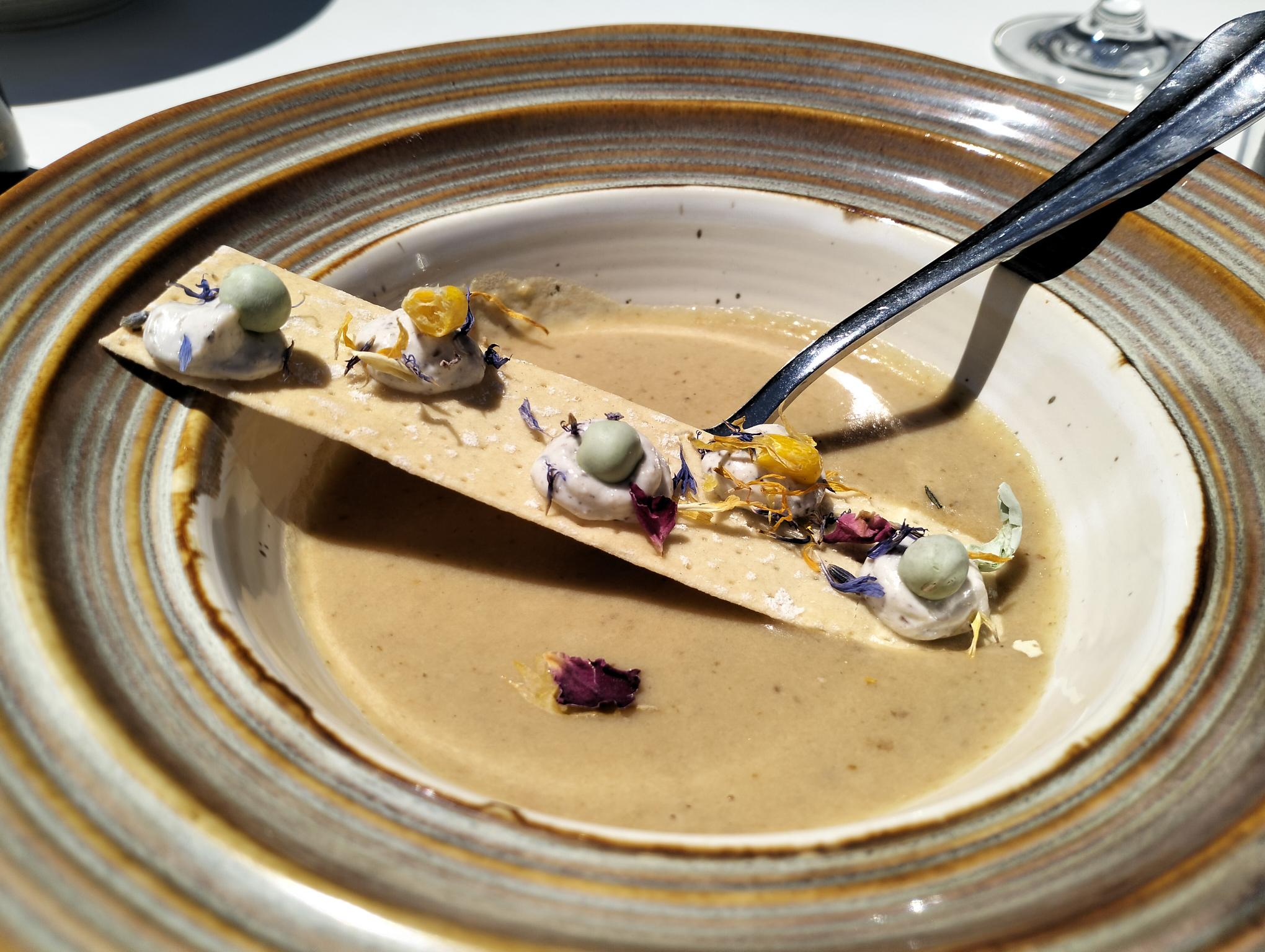
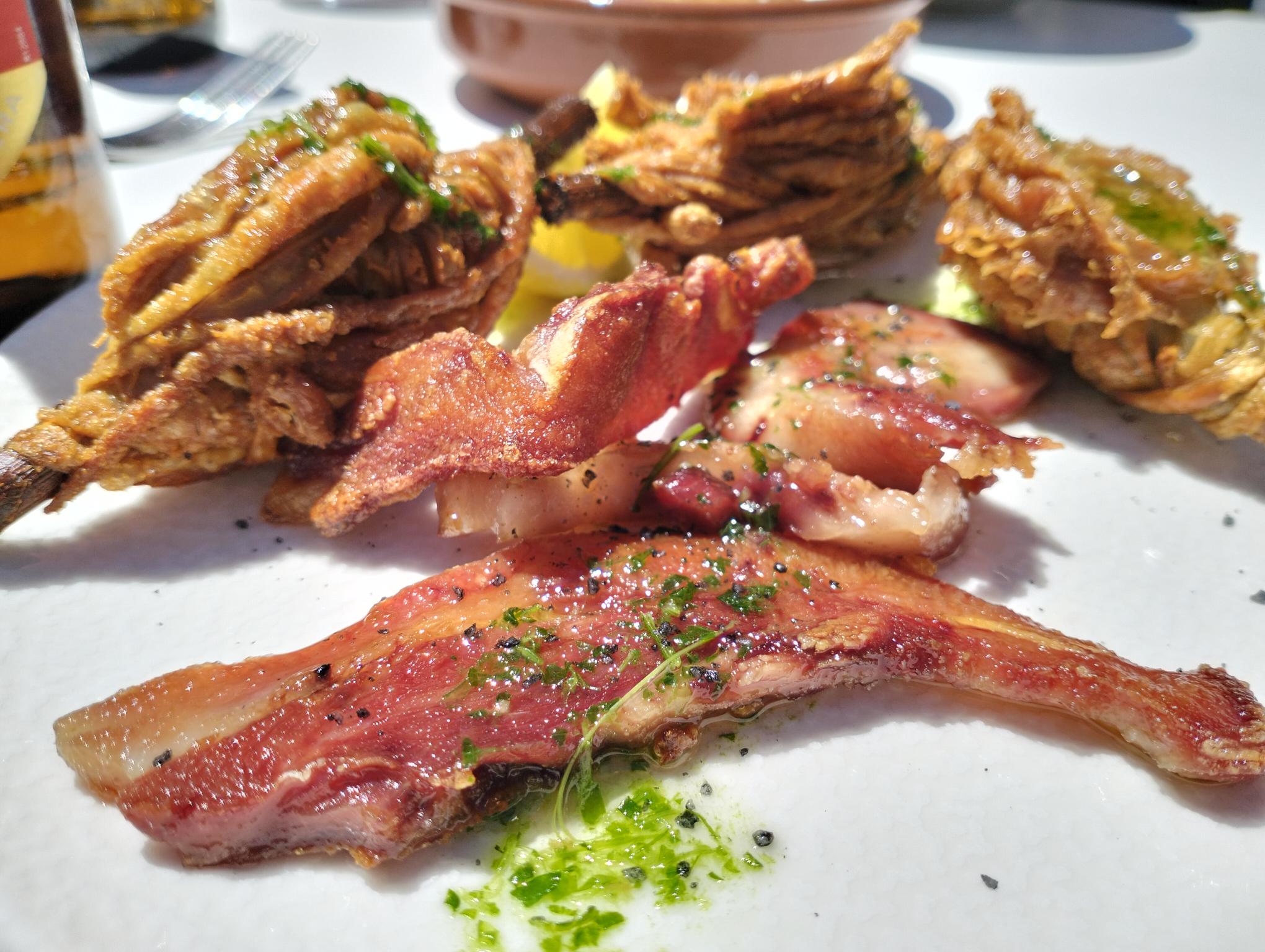
The participating restaurants gave the afternoon its emotional weight. Restaurante La Muralla, Restaurante Hotel Moya, Restaurante Los Tubos and Restaurante La Rebotica did much more than serve samples. Together, they sketched an edible map of the Cabriel Valley, one in which each bite hinted at altitude, season, memory and local habit. Offal appeared alongside game meats such as venison. There was ajoarriero, that deeply traditional, intensely Spanish comfort dish, baby broad beans with morcilla, as well as Zarajos and pigs cheek, artisan ice creams and handmade pastries that brought sweetness and craft to the table.
What made the offering compelling was its refusal to flatten the region into a single flavour profile. This is not a destination defined by one famous dish or one obvious product. Instead, the valley seems to speak in a chorus: mushrooms, meats, wine, bread, pastries, honey and preserved traditions, all held together by a strong sense of rural identity. It has the confidence of places that have long cooked for themselves before learning how to cook for visitors.
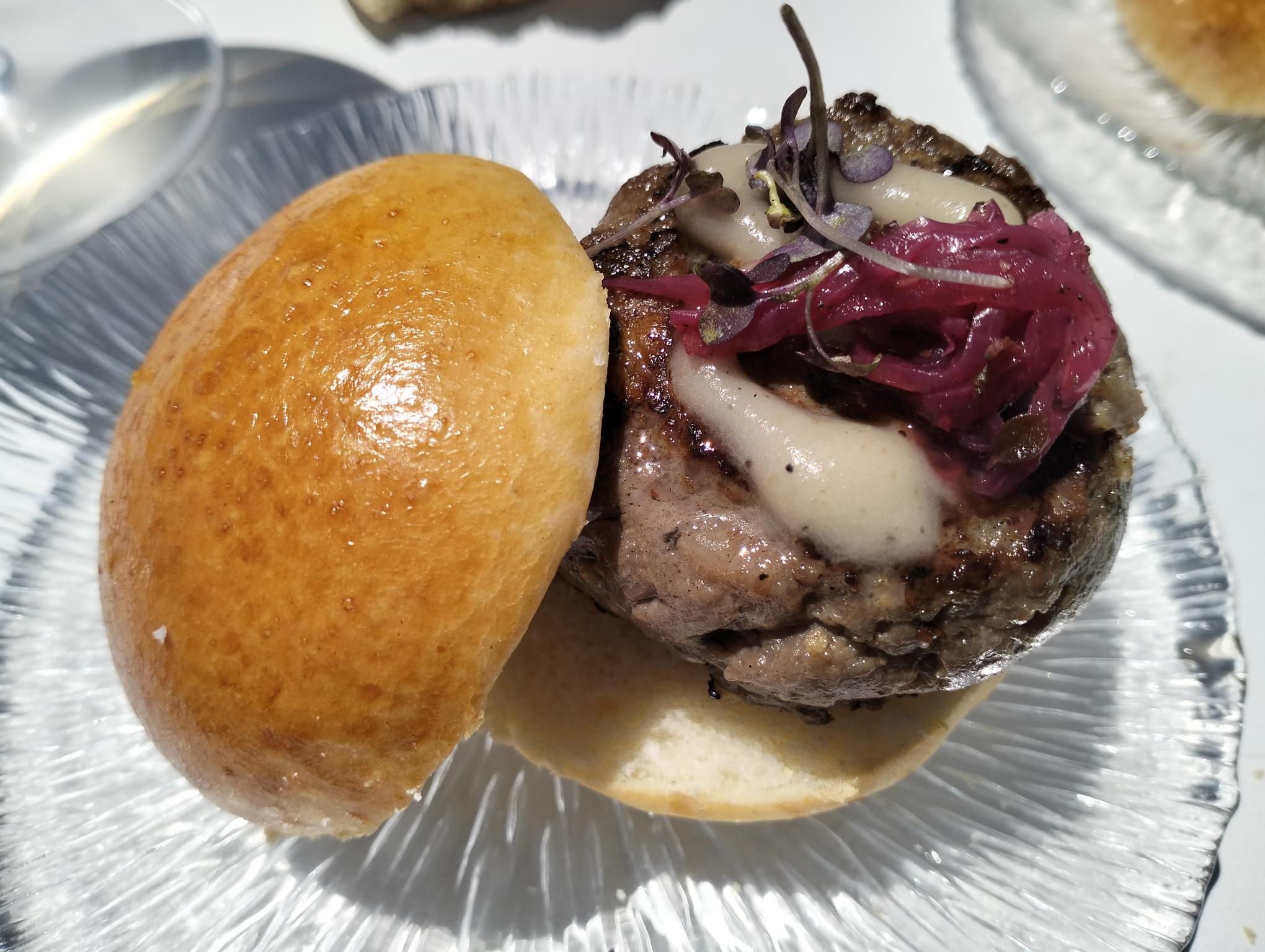
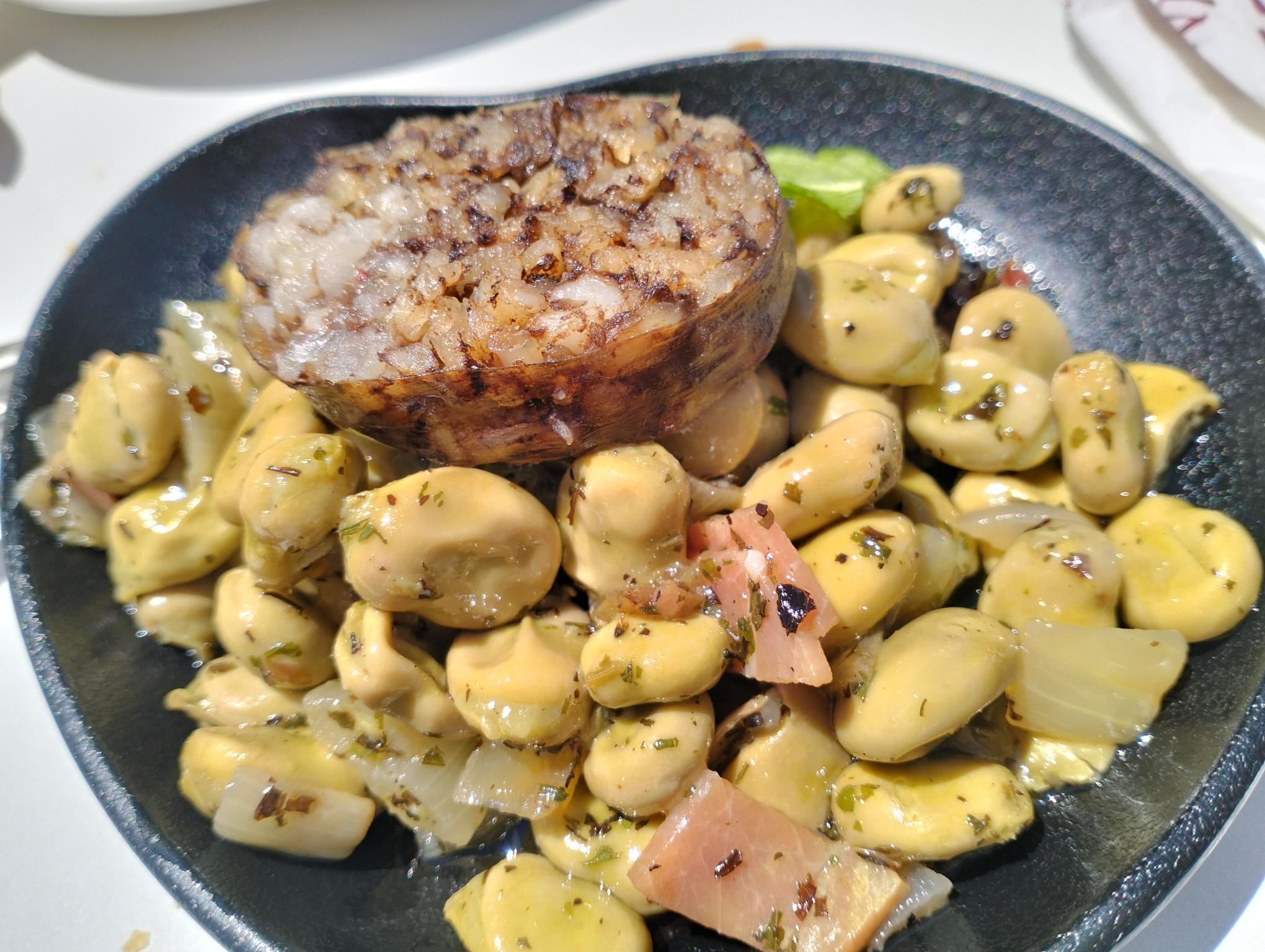
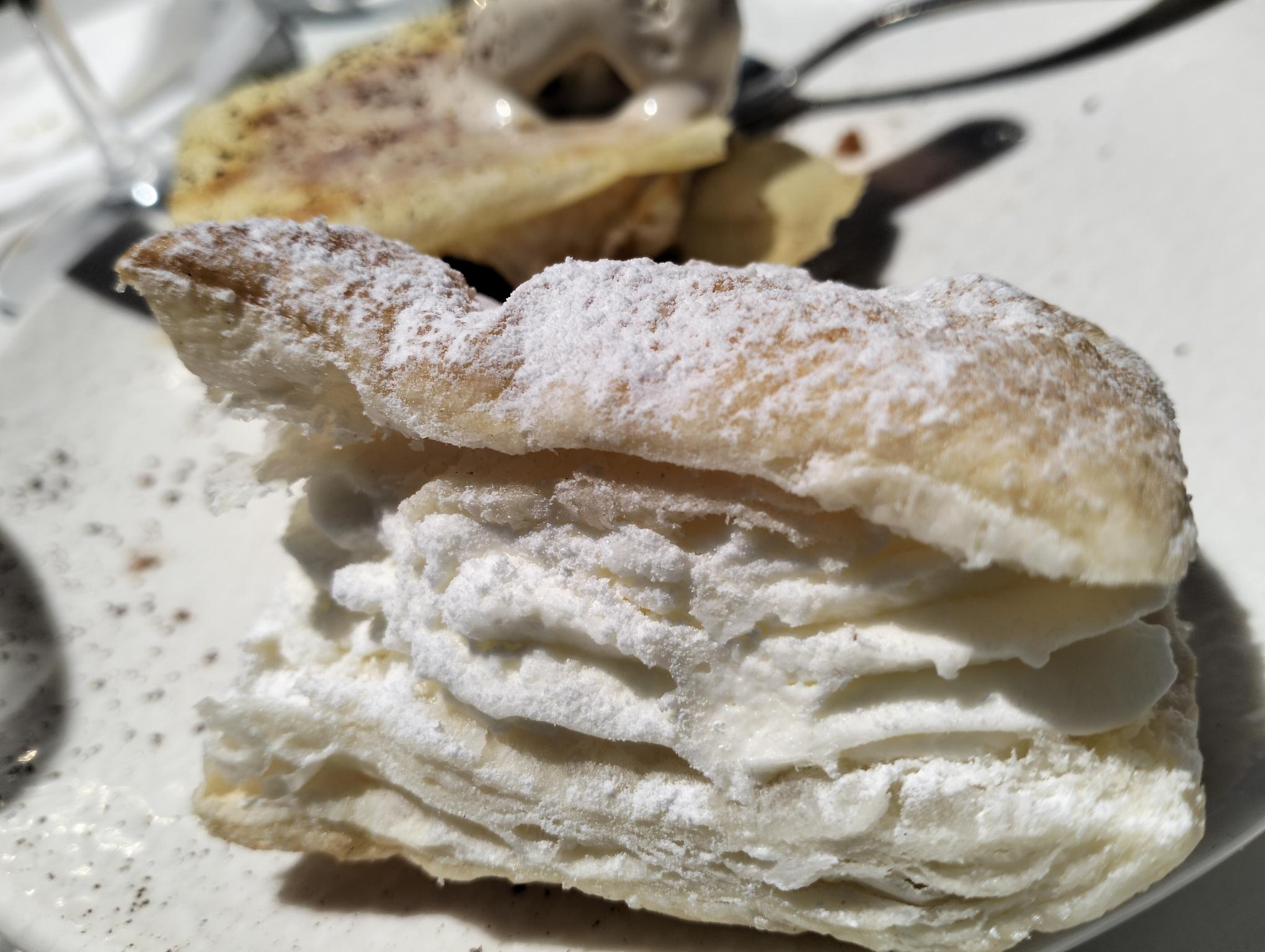
And, the wines from Siete Lindes (a creamy Macabeo with a lot of evident work on the lees and a Bobal with 15 months in oak) and Pago Alto Landon ( particularly the Pet Nat sparkling wine and the Natural white ‘Enfoque’) were excellent pairings for the food produced.
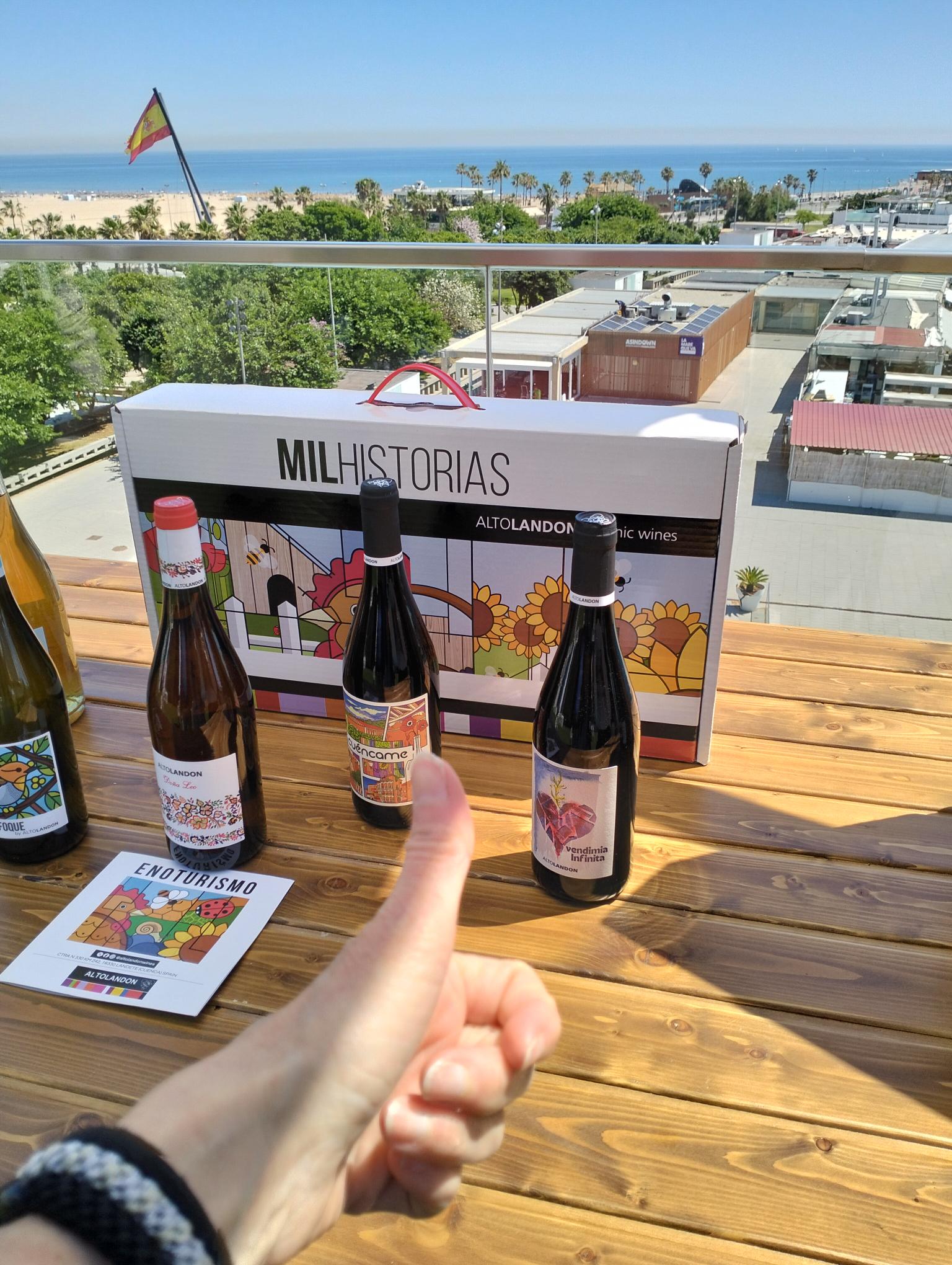
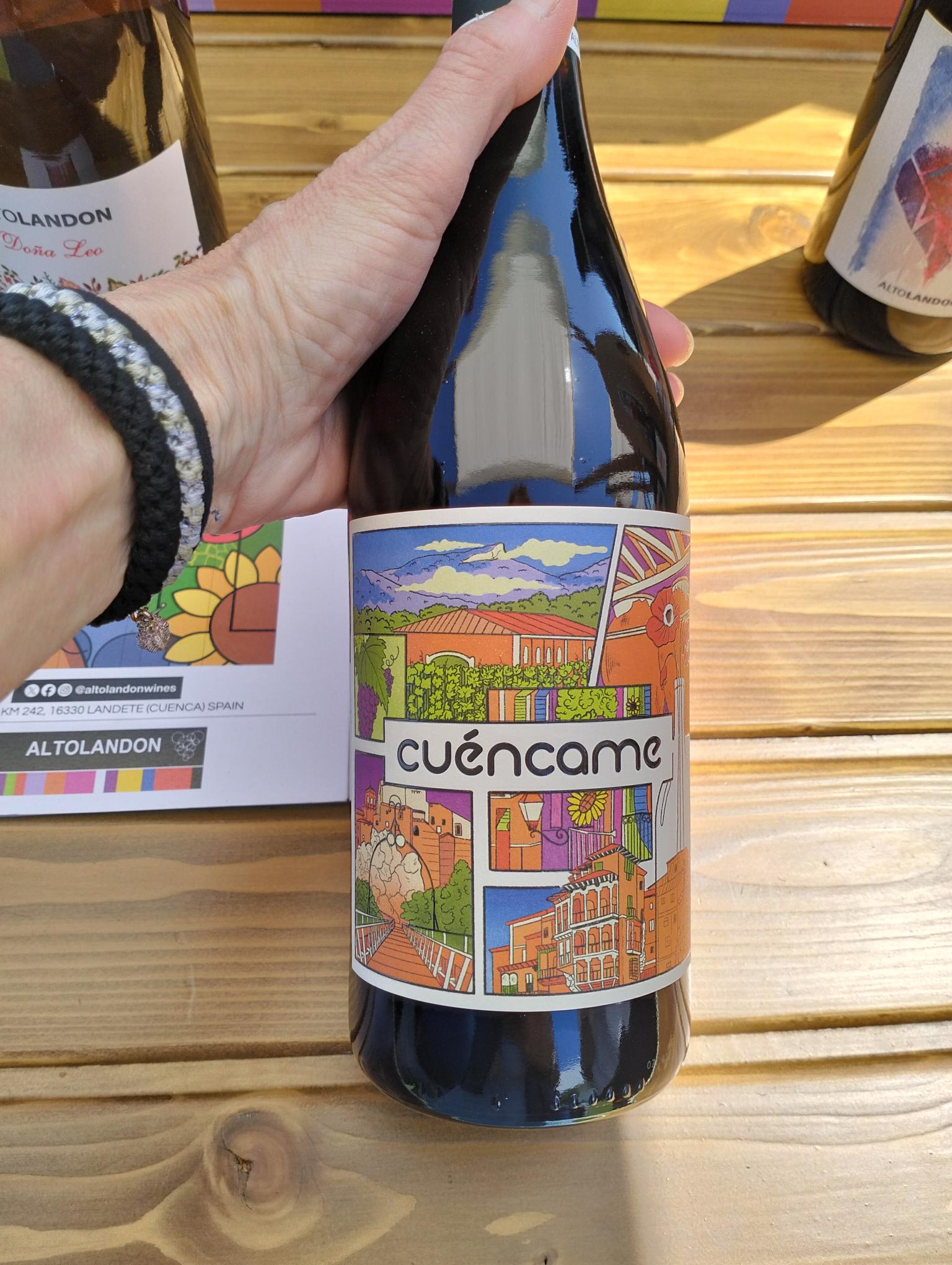
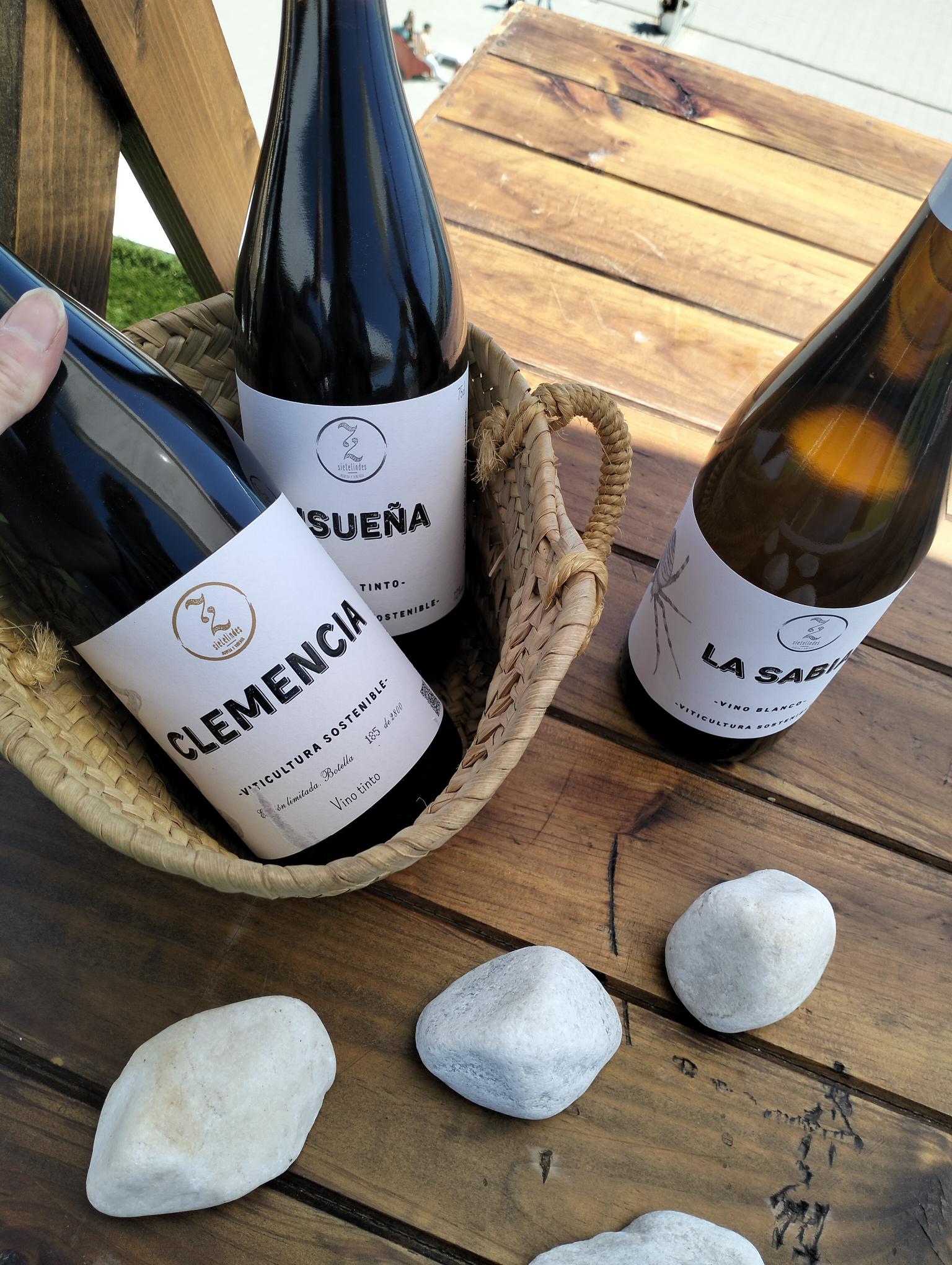
The producers behind the story.
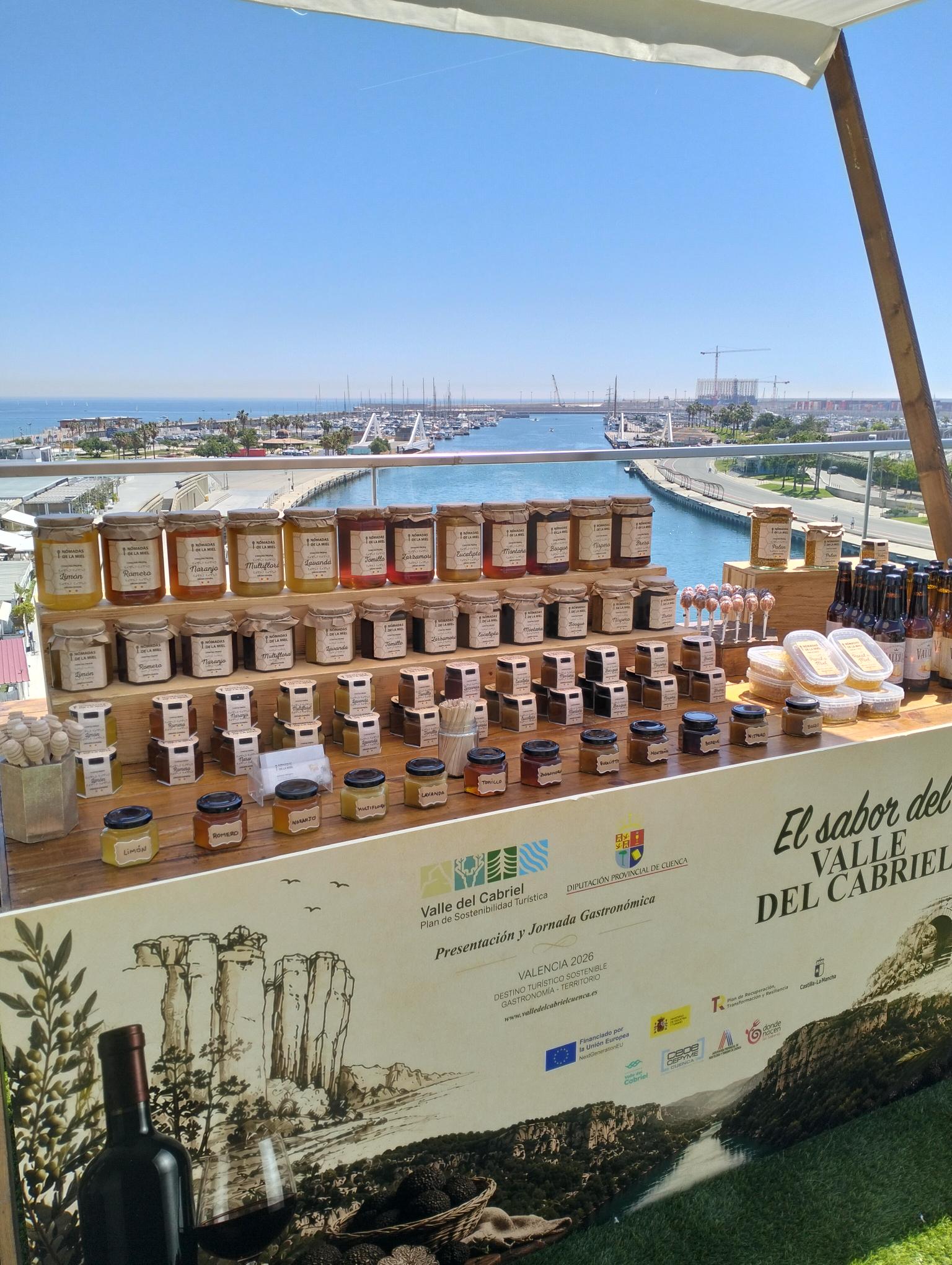
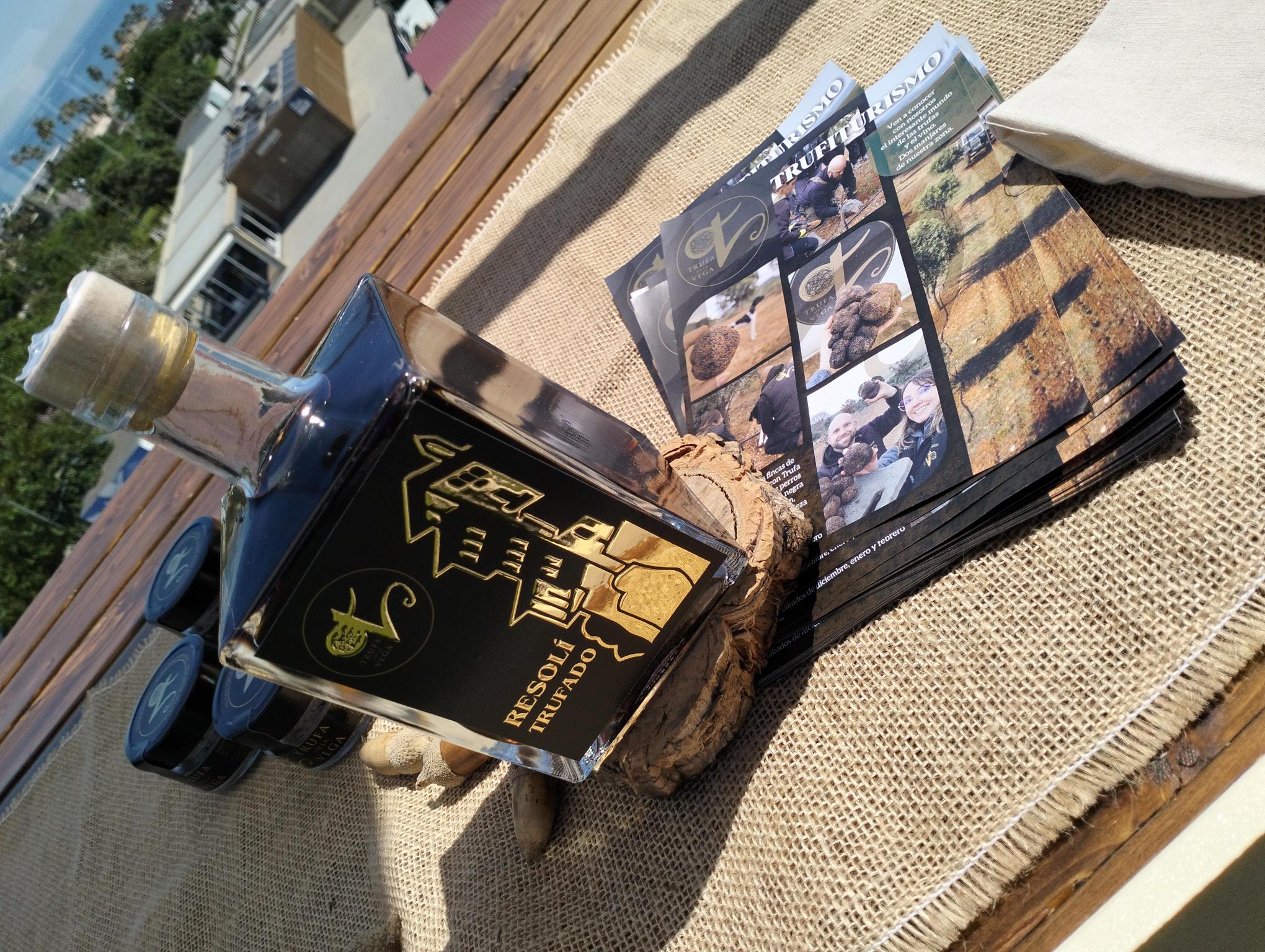
If the chefs gave the Cabriel Valley its public voice, the producers supplied the deeper grammar. Eight businesses from the area were present, many of them connected to the quality label Donde Nacen los Sabores. Their names alone read like a miniature route through the region. Trufa de la Vega from Alcala de la Vega, Vino Pago Alto Landon from Landete, Champiñones Soriano from Iniesta, Fergonvi from Villarta, Bodegas 7 Lindes from Villalpardo, Panadería José Martínez from Minglanilla, and the beekeeping projects Nómadas de la Miel and Apícola JR.
These details matter because they make the Cabriel Valley readable. A good destination is not only beautiful; it is understandable. Visitors want to know what is grown there, what people make with their hands, what the land naturally supports and how daily life tastes. Truffles suggest cold seasons and forested terrain. Mushrooms point to humidity, patience and culinary instinct. Honey speaks of biodiversity. Wine gives shape to the landscape in another register entirely. Bread and pastries remind us that the ordinary rituals of a place are often what stay with us longest.
For a tourism strategy, this is powerful material. Food is never only about appetite. It is one of the fastest ways to communicate landscape, economy, heritage and mood all at once. In the Cabriel Valley’s case, gastronomy becomes both invitation and argument: proof that the region is worth visiting not only for its scenery, but for the life being lived there now.
Why Valencia was the right place.
One of the most interesting aspects of the event was its location. Valencia was not chosen randomly. The city is close enough to the Cabriel Valley to make a weekend trip realistic, yet different enough to function as a genuine target market. The valley is already being promoted in the city through a broad digital campaign that has reached millions of people, alongside visibility at Joaquín Sorolla station and on EMT buses.
That makes sense. In contemporary travel, proximity has become one of the great luxuries. People are increasingly drawn to destinations that feel like a discovery. The Cabriel Valley can offer precisely that: a nearby escape with river landscapes, village character, strong local food and a cultural identity distinct enough to feel transporting. Presenting it in Valencia is less about advertising than about shortening the mental distance between curiosity and departure.
More than a food event.
It would be easy to describe this simply as a successful gastronomic showcase, but that would undersell what was really happening. Events like this are not just about products or publicity; they are about giving shape to a destination narrative. The institutional presence—from the Provincial Council of Cuenca to collaborating organisations—helped frame the project within a broader tourism strategy.
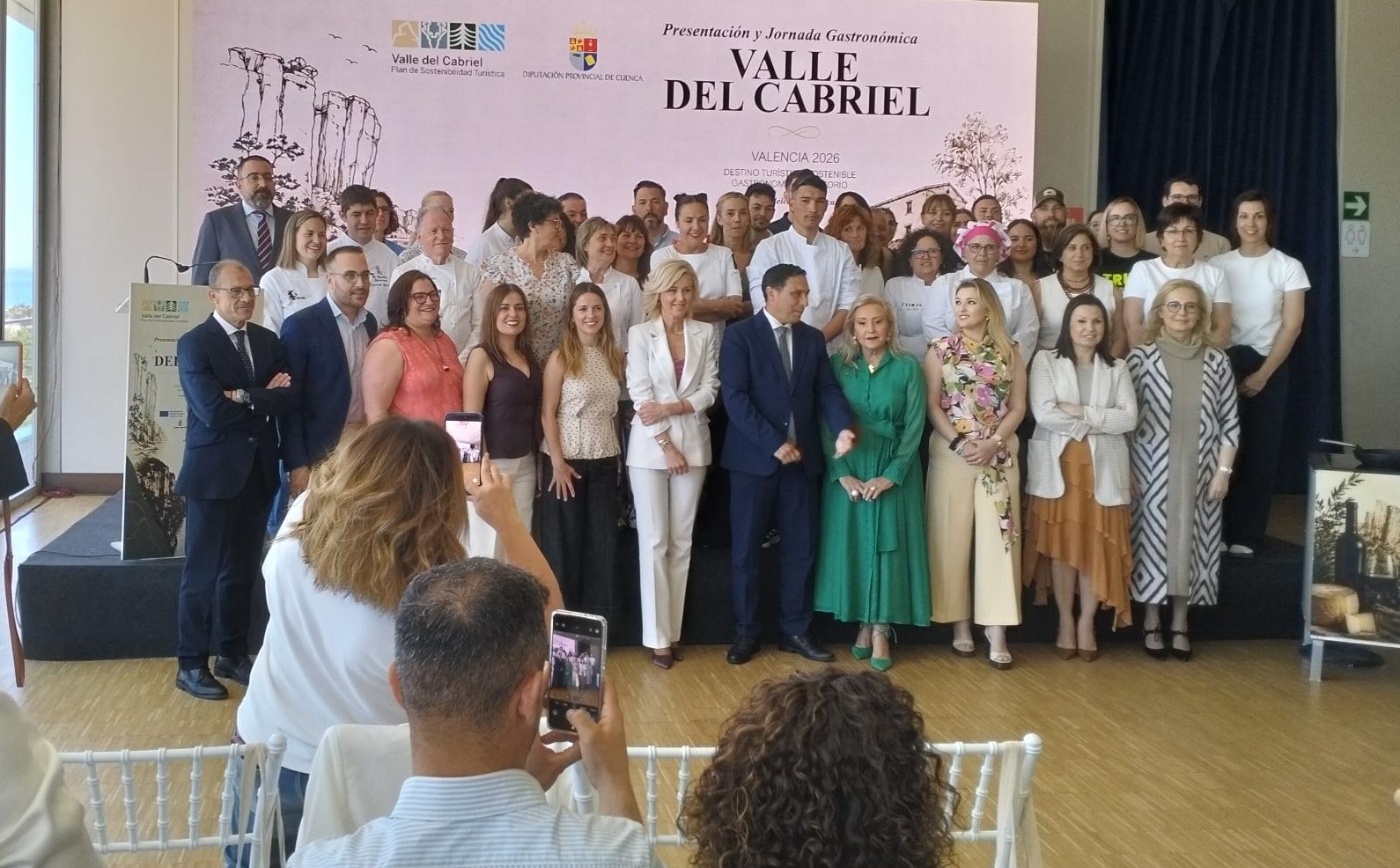
The Cabriel Valley’s appeal lies precisely in that balance. It is a biosphere landscape, but not a museum piece. It is rural, but not frozen in time. It has heritage, but also contemporary culinary energy. And that combination makes it especially appealing to travellers looking for depth rather than volume—for places where a trip can still feel personal. textured and grounded in something real. Perhaps that is the strongest impression the Cabriel Valley left in Valencia. And once you have tasted a place that knows how to tell its own story, the natural next step is to want to go and find out for yourself.
Conclusion.
It was a pleasure to attend this presentation and experience the enthusiasm of everyone responsible for its success! Thanks go once again to Maje Martinez for the invitation and the organisers for an exemplary event!
Categories: Gastronomy, Olive oil, Restaurants, Wine, wine tourism


